 vikram1@gmail.com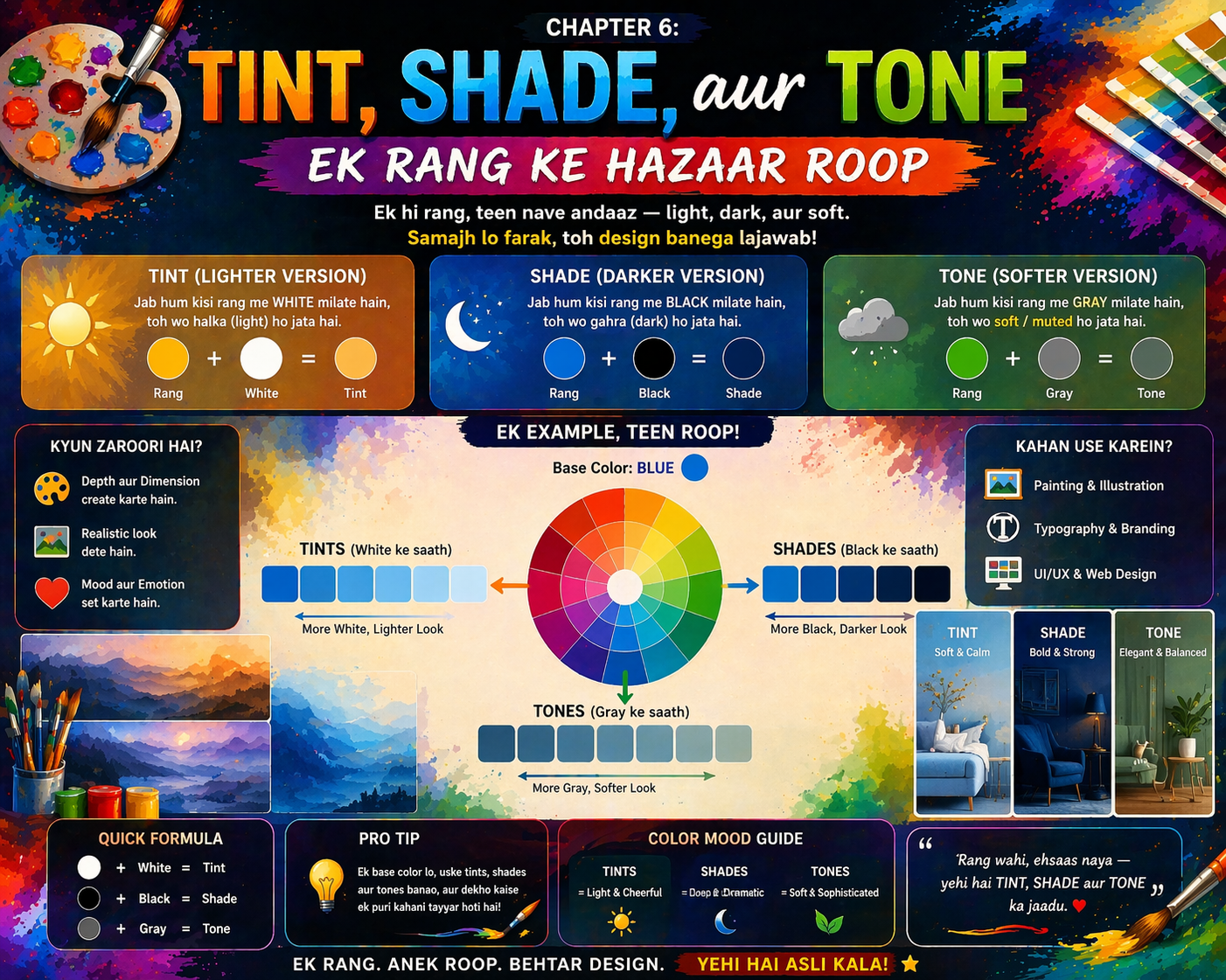
Shuruwat Se Pehle — Ek Seedha Sawaal
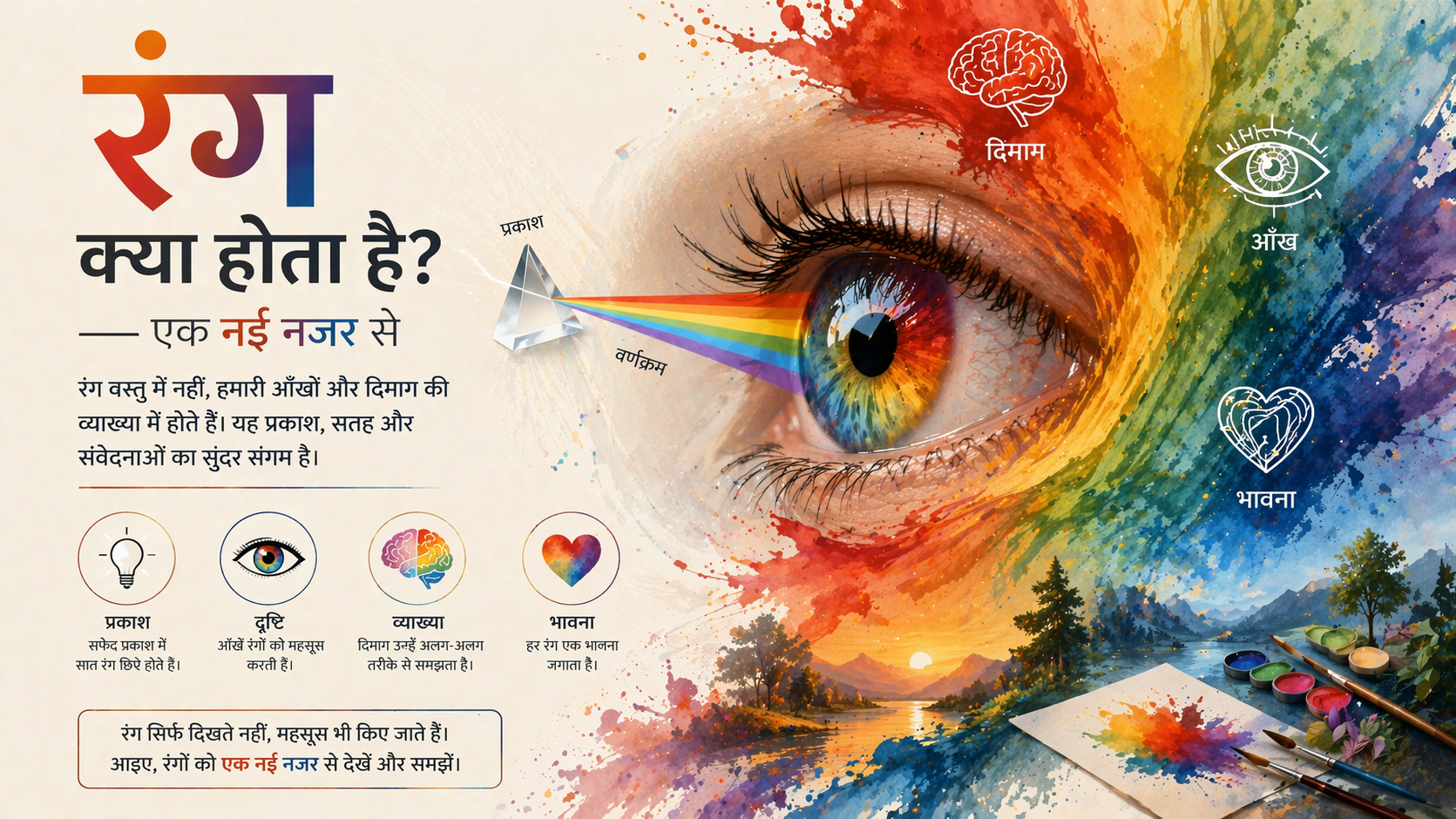
Aapne life mein hazaaron rang dekhe hain. Laal sunsets, neela aasman, hara jungle, peele phool. Lekin kya kabhi socha ki yeh rang actually kaam kaise karte hain? Kaise ek painter sirf teen rangon se poori duniya bana deta hai? Kaise ek brand sirf ek color se lakho logo ke dimaag mein ghus jaata hai?
Agar aapka jawab “nahi” hai — toh aap bilkul sahi jagah aaye hain.
Yeh hai Color Basics ka Ultimate Guide — woh guide jo aapko rang ki duniya mein sach mein expert banata hai. Koi boring lecture nahi, koi heavy theory nahi. Sirf real knowledge, real examples, real results.
Toh chaliye shuru karte hain.
Color Basics Kya Hai — Asli Baat
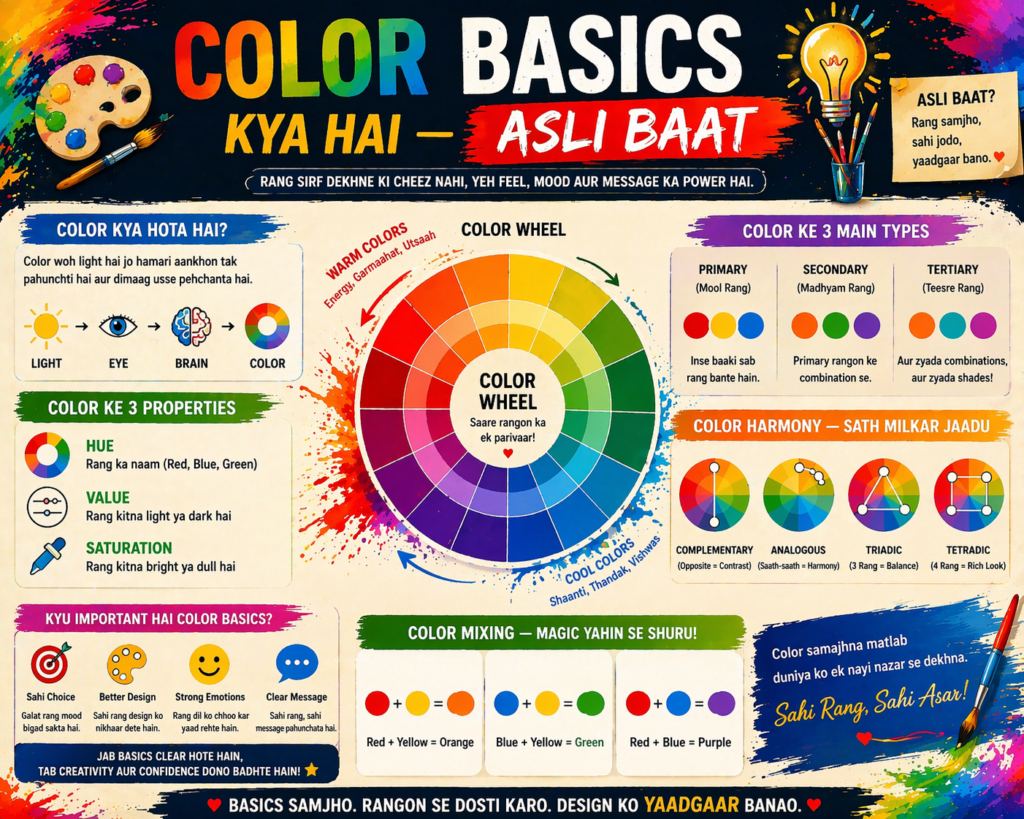
Color Basics ka matlab hai rang ke woh fundamental rules jo har jagah kaam aate hain — design mein, art mein, fashion mein, photography mein, aur everyday life mein bhi.
Jab aap Color Basics samajhte hain, toh aap:
- Sahi rang combinations choose kar sakte hain
- Galat combinations se bach sakte hain
- Apni creativity ko ek direction de sakte hain
- Professional results achieve kar sakte hain
Is Ultimate Guide mein hum step by step har ek concept cover karenge — Primary Colors se lekar Digital Color Codes tak. Ek bhi important cheez miss nahi hogi.
Chapter 1: Primary Colors — Har Rang Ki Maa
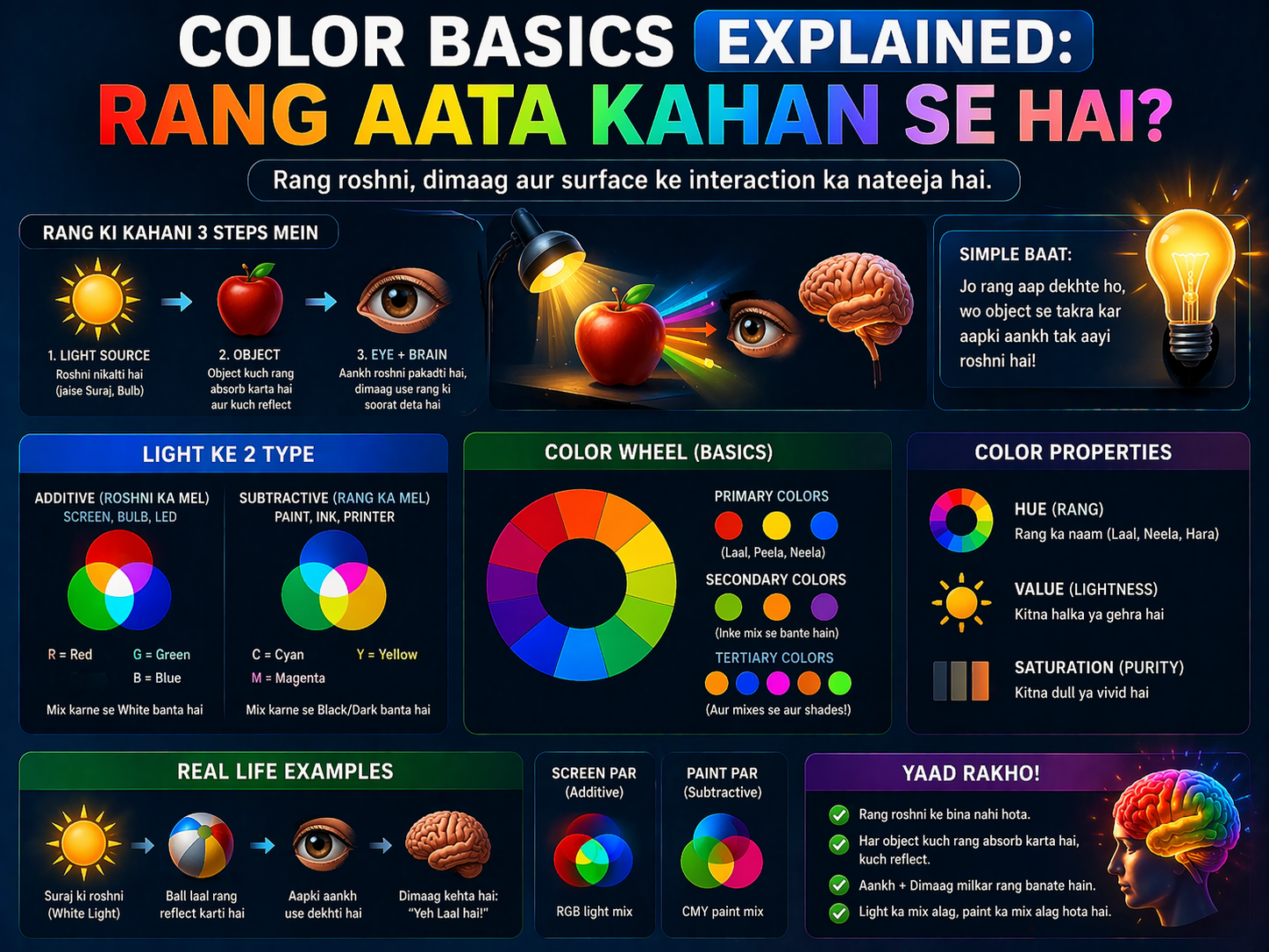
Primary Colors woh hain jinhe aap kisi bhi doosre rang ko milakar nahi bana sakte. Yeh rang nature mein khud se exist karte hain — inhe kisi ki zaroorat nahi.
Teen Primary Colors hain:
Laal (Red) — Power, energy, aur passion ka rang. Yeh sabse zyada attention attract karne wala rang hai.
Peela (Yellow) — Dhoop aur khushi ka rang. Yeh sabse zyada bright aur energetic rang hai.
Neela (Blue) — Aasman aur samundar ka rang. Yeh sabse zyada calm aur trustworthy rang maana jaata hai.
Yeh teeno rang milke baaki poori rang ki duniya banate hain. Isi liye is Ultimate Guide mein inhe sabse pehle discuss kiya gaya hai — yeh neenv hain, baaki sab uske upar khada hai.
Yaad Rakhne Wali Baat:
Primary Colors ko mix nahi kiya jaata — yeh khud doosre rangon ko mix karke banate hain. Ulta kaam nahi hota.
Chapter 2: Secondary Colors — Jab Do Milte Hain
Jab do Primary Colors milte hain, toh Secondary Colors bante hain. Yeh rang primary se zyada complex aur interesting hote hain.
| Combination | Result |
|---|---|
| Laal + Peela | Narangi (Orange) |
| Peela + Neela | Hara (Green) |
| Laal + Neela | Baingani (Violet/Purple) |
Yeh combinations samajhna rang sikhne ka pehla practical step hai. Ek baar yeh aapko yaad ho gaya, toh aap mentally kisi bhi rang ka source samajh sakte hain.
Practical Tip: Agar aapke paas sirf Primary Colors hain, toh aap in combinations se poora rainbow bana sakte hain. Yahi Color Basics ka jaadu hai.
Chapter 3: Tertiary Colors — Expert Level Rang
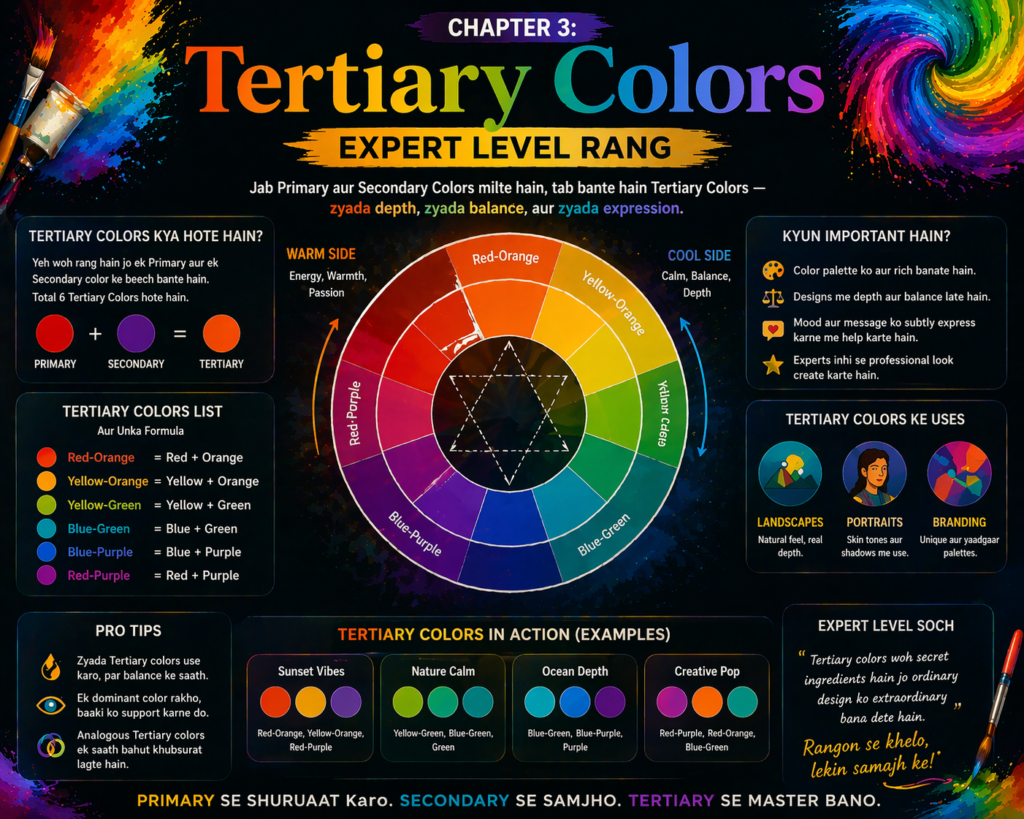
Jab ek Primary Color aur uske paas wala Secondary Color milte hain, toh Tertiary Colors bante hain. Yeh rang zyada natural aur realistic lagte hain — isliye professional artists inhe zyada prefer karte hain.
6 Tertiary Colors hote hain:
- Red-Orange (Laal-Narangi)
- Yellow-Orange (Peela-Narangi)
- Yellow-Green (Peela-Hara)
- Blue-Green (Neela-Hara / Teal)
- Blue-Violet (Neela-Baingani)
- Red-Violet (Laal-Baingani)
Yeh Ultimate Guide aapko ek ek step par aage le jaata hai — Primary se Secondary, Secondary se Tertiary. Exactly isi tarah rang ki understanding develop hoti hai.
Chapter 4: Color Wheel — Rang Ka Pura Map
Color Wheel ek circular chart hai jo dikhata hai ki saare rang aapas mein kaise connected hain. Yeh shayad rang ki duniya ka sabse important tool hai.
Color Wheel aapko kya batata hai:
Complementary Colors — Color Wheel par ekdum opposite rang. Jaise Laal aur Hara, Neela aur Narangi. Yeh combination bahut bold aur eye-catching hota hai.
Analogous Colors — Color Wheel par ek doosre ke paas wale rang. Jaise Peela, Peela-Narangi, Narangi. Yeh combination bahut smooth aur pleasing lagta hai.
Triadic Colors — Color Wheel par teen rang jo ek triangle banate hain. Jaise Laal, Peela, Neela. Yeh combination vibrant aur balanced hota hai.
Split-Complementary — Ek rang aur uske complementary ke dono neighbours. Yeh combination Complementary se thoda soft hota hai, lekin equally attractive.
Har ek Ultimate Guide mein Color Wheel ka mention hona zaroori hai — aur iska reason simple hai: yeh ek aisa tool hai jise samjho toh rang kabhi galat nahi lagega.
Chapter 5: Warm aur Cool Colors — Rang Ka Mizaaj
Yeh concept Color Basics ka woh hissa hai jo logon ki everyday life mein sabse zyada kaam aata hai.
Warm Colors (Garm Rang):
Laal, Narangi, Peela — yeh rang garmahat, josh, aur energy ka ehsaas dete hain. Yeh rang visually “aage” aate hain, matlab cheezein badi aur closer dikhti hain.
Kab use karein: Jab attention attract karni ho, excitement create karna ho, ya energy feel karni ho.
Cool Colors (Thande Rang):
Neela, Hara, Baingani — yeh rang sukoon, gehraai, aur professionalism ka ehsaas dete hain. Yeh rang visually “peeche” jaate hain, matlab space aur distance ka illusion dete hain.
Kab use karein: Jab calm aur relaxing feel create karni ho, trust banana ho, ya space zyada bada dikhana ho.
Real World Examples:
- McDonald’s, KFC, Pizza Hut — sab warm colors use karte hain. Kyu? Kyunki yeh bhook badhate hain aur excitement dete hain.
- Facebook, Twitter, LinkedIn — sab blue use karte hain. Kyu? Kyunki neela trust aur reliability ka rang hai.
- Hospitals aur Spas — hara aur neela use karte hain. Kyu? Kyunki yeh rang healing aur calm ka ehsaas dete hain.
Chapter 6: Tint, Shade, aur Tone — Ek Rang Ke Hazaar Roop
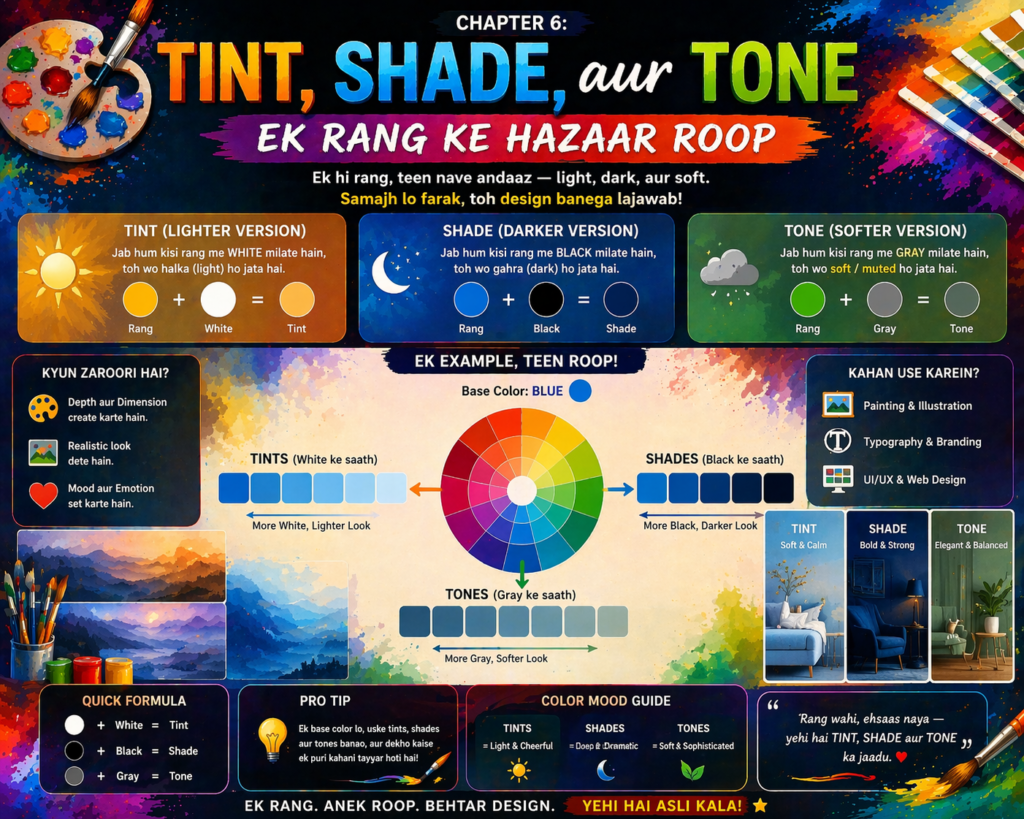
Sirf rang ka naam jaanna kaafi nahi hota. Ek hi rang mein hajaar variations hoti hain — aur yeh variations samajhna is Ultimate Guide ka ek important chapter hai.
Tint kya hai? Kisi rang mein white (safed) milaane se Tint banta hai. Rang lighter ho jaata hai. Example: Laal mein white = Pink (Gulabi)
Shade kya hai? Kisi rang mein black (kaala) milaane se Shade banta hai. Rang darker ho jaata hai. Example: Neela mein black = Navy Blue
Tone kya hai? Kisi rang mein grey milaane se Tone banta hai. Rang muted aur realistic ho jaata hai. Example: Hara mein grey = Sage Green
Interior designers, fashion designers, aur web designers zyada tar Tints aur Tones use karte hain kyunki pure bright colors har jagah suit nahi karte. Yeh subtlety inhe professional banati hai.
Chapter 7: Color Psychology — Rang Aur Insaan Ka Dimaag
Yeh chapter is Ultimate Guide ka sabse fascinating hissa hai. Rang sirf aankhon ko nahi, seedha hamare emotions aur decisions ko affect karta hai.
Laal (Red): Bhook badhata hai, urgency create karta hai, love aur passion ko represent karta hai. Sale signs mein laal isliye hota hai — aapko jaldi action leni hai!
Neela (Blue): Trust, security, aur calmness. Banks aur tech companies isliye blue use karte hain — woh chahte hain aap unpe trust karo.
Peela (Yellow): Happiness, creativity, aur warning dono. Attention grab karne ke liye best rang hai — isliye taxis aur road signs peele hote hain.
Hara (Green): Nature, health, aur growth. Organic food brands, environment companies, aur health apps hara isliye use karte hain.
Kala (Black): Luxury, power, aur mystery. High-end fashion brands, luxury cars, premium tech products — sab black se apni premium identity banate hain.
Safed (White): Simplicity, cleanliness, aur space. Apple ka design philosophy white pe based hai — aur duniya jaanti hai woh kitna effective hai.
Narangi (Orange): Friendly, affordable, aur fun. Amazon, Fanta, Nickelodeon — yeh sab approachable aur energetic feel dena chahte hain.
Baingani (Purple): Creativity, royalty, aur wisdom. Beauty brands aur luxury goods mein purple ka use aam hai.
Chapter 8: Color Harmony — Khoobsurat Combinations Ka Formula
Color Harmony ka matlab hai rang ka woh combination jo aankh ko achha lage. Ek disharmonious design chahe kitna bhi mehnat se banaya gaya ho — accha nahi lagega. Ek harmonious design seedha dil mein utarta hai.
Is Ultimate Guide mein Color Harmony ke 4 main formulas hain jo aapko hamesha kaam aayenge:
1. Monochromatic: Ek hi rang ke alag alag tints, shades, aur tones. Safe aur elegant combination. Example: Light blue, medium blue, dark navy.
2. Analogous: Color Wheel par paas ke rang. Smooth aur natural feel. Example: Green, Yellow-Green, Yellow.
3. Complementary: Opposite colors. Bold aur high contrast. Example: Orange and Blue, Red and Green.
4. Triadic: Teen evenly spaced colors. Vibrant aur balanced. Example: Red, Yellow, Blue.
Koi bhi project shuru karne se pehle in mein se ek formula choose kar lo — aur result hamesha professional hoga.
Chapter 9: Digital Colors — Screen Ki Duniya Ke Rang
Aaj ke zamane mein sirf physical rang jaanna kaafi nahi. Agar aap koi bhi digital kaam karte hain — social media, website, video — toh digital color models jaanna zaroori hai. Yeh is Ultimate Guide ka modern aur practical chapter hai.
RGB Model:
- R = Red, G = Green, B = Blue
- Screen (mobile, laptop, TV) ke liye use hota hai
- Light se rang bante hain — isliye screen par colors zyada bright dikhte hain
- Example: RGB(255, 0, 0) = Pure Red
CMYK Model:
- C = Cyan, M = Magenta, Y = Yellow, K = Black
- Printing ke liye use hota hai
- Ink se rang bante hain
- Print karne se pehle hamesha CMYK mein convert karein
HEX Codes:
- 6-digit alphanumeric code jo ek specific color represent karta hai
- Web design aur graphic design mein use hota hai
- Example:
#FF0000= Red,#FFFFFF= White,#000000= Black
Important Tip:
Screen par jo color dikhta hai woh print mein alag dikh sakta hai. Iska reason RGB aur CMYK ka farq hai. Professional designers hamesha print ke liye CMYK file alag banate hain.
Chapter 10: Color Contrast — Padhne Aur Dekhne Ka Aasaan Formula
Color Contrast ka matlab hai do colors ke beech ka visual difference kitna clear hai. Agar contrast kam hai, toh design padhna aur samajhna mushkil hota hai. Zyada contrast hone se design sharp aur clear hoti hai.
High Contrast Examples:
- Kaala text, Safed background — best readability
- Safed text, Dark blue background — professional aur clear
Low Contrast Examples (Avoid Karein):
- Light yellow text, White background — almost invisible
- Light grey text, White background — aankhon pe strain
Accessibility Rule: Achhi design woh hoti hai jo sabke liye readable ho — chahe normal vision ho ya color blindness. WCAG guidelines kehti hain text aur background ka contrast ratio kam se kam 4.5:1 hona chahiye normal text ke liye.
Chapter 11: Color Basics Ko Practical Life Mein Kaise Use Karein
Yeh sab knowledge tabhi kaam aayega jab aap ise apply karein. Is Ultimate Guide ka yeh chapter aapko real situations ke liye ready karta hai.
Room Decoration: Ek main color chunein (wall ka rang). Phir uske Analogous colors furniture aur accessories mein use karein. Accents ke liye Complementary color ka ek piece rakhen. Result: Balanced aur stylish room.
Personal Fashion: Base mein neutral rango ka use karein — white, black, grey, beige, navy. Uske upar ek pop color add karein — bag, shoes, ya dupatta. Toh kabhi boring nahi lagega.
Social Media Branding: Apne account ke liye 2-3 colors fix karein. Hamesha unhi ka use karein. Isse aapka feed consistent aur professional lagega — aur brand identity build hogi.
Presentation Design: Dark background par light text ya light background par dark text. Hamesha high contrast. Zyada se zyada 3 colors ki palette. Clean aur professional result guaranteed.
Logo Design: Logo mein hamesha simple colors use karein. Zyada colors logo ko complex aur unprofessional banate hain. Nike, Apple, McDonald’s — sabke logos mein limited colors hain.
Chapter 12: Common Galtiyan — Inse Bacho
Bahut se log Color Basics seekhne ke baad bhi yeh galtiyan karte hain:
Galti 1: Bahut zyada rang use karna Ek design mein 5-6 rang = confusion. Hamesha 2-3 rang ki palette rakhen.
Galti 2: Contrast ignore karna Kam contrast wali design professional nahi lagti aur padhne mein mushkil hoti hai.
Galti 3: Screen aur print ka farq bhoolna RGB screen ke liye, CMYK print ke liye. Yeh bhoolne se print mein colors galat aa jaate hain.
Galti 4: Color Psychology ko ignore karna Galat rang galat message deta hai. Ek funeral company ka laal logo inappropriate lagega.
Galti 5: Sirf khubsurti dekhna, function bhoolna Rang ka kaam sirf sundar dikhna nahi hai — sahi message dena bhi hai.
Conclusion — Ab Aap Ready Hain
Is poori Ultimate Guide ko padhne ke baad ab aap rang ko ek nayi nazar se dekhenge. Rang sirf aankhon ka kaam nahi hai — yeh ek poori language hai. Aur ab aap woh language samajhte hain.
Is Ultimate Guide mein aapne seekha:
- Primary, Secondary, Tertiary Colors ka system
- Color Wheel aur uske formulas
- Warm aur Cool colors ka practical use
- Tint, Shade, Tone ka concept
- Color Psychology ki power
- Color Harmony ke 4 formulas
- RGB, CMYK, HEX — Digital colors
- Color Contrast ka importance
- Real life mein kaise apply karein
- Common galtiyan aur unse bachne ke tarike
Yeh Ultimate Guide aapke liye ek reference bhi hai — jab bhi koi confusion ho, wapas aao aur dobara padho.
Rang ek bahut powerful cheez hai. Aur ab yeh power aapke haath mein hai. Use it wisely.